The short answer
PPC B2B lead generation works when your ads reach buyers searching for what you sell, and Google learns which clicks became real deals. Switch off the default settings that waste budget, send every click to a dedicated landing page, and feed qualified leads from your CRM back into Google Ads. In 2026, business services ads averaged $93.69 per lead.
I've worked in Google Ads since 2018, including a year optimising accounts for agencies on behalf of Google, and our team has optimised 150+ accounts. For Anhamm, a flood protection manufacturer whose old website brought in no enquiries, Google Ads became the biggest lever behind about 15 qualified leads a month.
Google Ads will happily sell you leads. Some of them will even be people. One will be a student writing a thesis on industrial valves, who'd like a free sample and your personal opinion, by Friday.
On this page
- B2B Google Ads benchmarks
- Does PPC work for B2B?
- B2B vs B2C PPC
- 3 settings to change first
- B2B PPC campaigns that work
- Landing pages that convert
- Google Ads vs LinkedIn
- How to stop junk leads
- A worked budget example
- What we see in B2B accounts
- FAQ
B2B Google Ads benchmarks for 2026
| Industry | Cost per click | Conversion rate | Cost per lead |
|---|---|---|---|
| All industries | $5.42 | 8.18% | $66.69 |
| Business services | $5.87 | 4.85% | $93.69 |
| Industrial and commercial | $5.87 | 8.20% | $75.19 |
Source: LocaliQ's 2026 search advertising benchmarks, Google search ads across thousands of accounts. Business services convert at roughly half the all-industry rate, which is why B2B PPC feels expensive. Industrial and commercial advertisers do noticeably better.
$93.69 for one form fill sounds steep until you remember the last trade show. The stand cost more than a car, and the best contact you made was the man who sold you coffee.
Does PPC work for B2B lead generation?
Yes, when buyers search for what you sell and one deal is worth far more than a few dozen clicks. Search ads reach the buyers who are actively looking, at the moment they build their shortlist. In 6sense's 2025 report, 94% of buying groups had ranked preferred vendors before first contact.
95% of purchases came from the vendors on that day-one shortlist. So the job of B2B PPC is simple to say: be on the list the week a buyer starts looking.
Most people who see your ad aren't buying yet. The Ehrenberg-Bass Institute puts it at about 5% of B2B buyers in market at any time, a rule of thumb rather than a measurement. The other 95% sometimes click anyway, out of curiosity, and you pay for it like a round of drinks for people who aren't staying.
If nobody searches for your product at all, search ads have nobody to show to. Then LinkedIn, trade media or SEO have to create the demand first.
How is B2B PPC different from B2C PPC?
B2B PPC sells to a group, not a person, over months instead of minutes. Forrester found an average of 13 people involved in a business buying decision, and 86% of B2B purchases stall at some point. So the conversion you optimise for is a qualified enquiry, never just a click.
| B2B PPC | B2C PPC | |
|---|---|---|
| Who decides | A buying group, about 13 people | One person |
| Time to decide | Months, about 10 on average (6sense) | Minutes to days |
| What you optimise for | Qualified leads and deals from your CRM | Online sales |
| Conversions a month | Often a few dozen | Often hundreds or more |
In B2C, someone sees your ad and buys trainers before their bus stop. In B2B, 13 people need to agree, and one of them is on holiday until the 14th.
B2B PPC strategy: the 3 default settings to change first
Three Google Ads defaults are built for volume, not for B2B lead quality. Change them before you spend a dollar:
- Search partners off. Google says "search partners are included by default". In one B2B account from 2015, switching them off raised the conversion rate 90%. That's one old account, so treat it as a test worth running, not a law.
- Location set to "Presence". The default, "Presence or interest", also shows ads to people who are merely interested in your area. If you only sell in the US, that's budget spent abroad.
- Broad match off until you have data. Google pairs broad match with Smart Bidding, which needs conversion data most young B2B accounts don't have yet. Start with exact and phrase match.
As Ironpaper put it, Google's recommendations "are designed to maximize the number of leads without concern for the quality of those leads." The defaults are a waiter who keeps topping up your glass. Very attentive, and not on your side of the bill.
Which B2B PPC campaigns bring qualified leads?
The B2B PPC campaigns that bring qualified leads target searches with buying intent: the problem, the application, the specification or the part number, plus "supplier" and "manufacturer" terms. Send each group to its own landing page, never your homepage, and build a negative keyword list before launch.
Start the negatives with jobs, salary, definition, "what is" and the products you don't make. Without them, your ad budget hosts a careers fair, and the thesis student gets a free ride to your enquiry form.
Then protect the budget from people you already know. Brandon Coward of Powered by Search: "once a lead has spoken to your sales team, exclude them from your remarketing campaigns." Upload your customer list too. Below $50,000 in lifetime spend Google only lets you use it for exclusions and observation, which is still worth having.
What makes a B2B PPC landing page convert?
A B2B PPC landing page converts when it repeats the buyer's search in the headline, shows the product or service that solves it, backs it with proof, and puts a short enquiry form on the same screen. Across industries, the median landing page converts at 6.6%, according to Unbounce.
For technical buyers, add the things an engineer checks first: key specifications in plain text, certificates, and one reference project. Ask three to five qualifying questions on the form, such as application, quantity and timeline, so sales can tell a project from a pen pal.
The homepage is the classic mistake. Sending a paid click there is like answering a specific question by handing over the whole company brochure, then asking them to find page 14 themselves, while you wait, slightly too close.
Google Ads vs LinkedIn Ads for B2B
Google Ads reaches buyers who are searching right now, so it usually brings leads faster. LinkedIn Ads targets job titles and companies, which helps when few people search for what you sell. Most B2B accounts we'd start with Google Search, then add LinkedIn once tracking works.
| Platform | Best for | Watch out for |
|---|---|---|
| Google Search | Buyers actively searching for your product or problem | Junk leads from broad match and search partners |
| LinkedIn Ads | Reaching job titles and named target companies | $10 a day minimum, $25 suggested for new advertisers |
| Display retargeting | Cheap reminders to people who already visited | Low lead quality on its own |
LinkedIn doesn't publish an average cost per click, so be wary of anyone quoting one with a straight face.
How to stop junk leads: optimise to qualified leads, not form fills
Import your CRM outcomes back into Google Ads, so bidding learns from qualified leads and deals instead of every form fill. Google accepts offline conversions up to 90 days after the click, or 63 days with enhanced conversions for leads. Upload at least weekly.
Once you have a steady flow, optimise to sales-qualified leads, not to "meeting booked". Test a small upload and check the match rate before you change any bidding.
Watch Performance Max closely. On one New Zealand B2B account, Sam Frost reported "about 90% of the leads were fake". The worst part of fake leads is that they look real. Your sales rep spends Tuesday morning leaving polite voicemails for a person who doesn't exist.
Give the algorithm time, too. Google says a new bid target can take 1 to 2 conversion cycles to settle, and a B2B cycle is weeks long. This tracking step is where our B2B Google Ads agency work starts: tracking first, bidding second.
How much should you budget for B2B PPC? A worked example
Budget backwards from cost per qualified lead and your deal value, not from a round number. The example below uses LocaliQ's 2026 business services cost per lead. The qualification and close rates are assumptions for illustration, so swap in your own.
| Step | Number | Cost each |
|---|---|---|
| Monthly ad budget | $3,000 | - |
| Leads | About 32 | $93.69 |
| Qualified leads (1 in 3, assumed) | About 11 | About $281 |
| Deals (1 in 5 qualified, assumed) | About 2 | About $1,400 |
That's a bargain if one deal is worth $20,000 to you. If it's worth $900, PPC isn't your channel, and no amount of clever bidding changes that. Do this maths before the first click, not in month three, across the table from a finance manager who brought their own calculator.
What we see in B2B ad accounts
Anhamm is the clearest example. Before we started, the website was a digital business card: no enquiries and no sales came from it, and earlier Google Ads attempts had run without tracking. We built a new website, optimised it, and Google Ads became the biggest lever behind about 15 qualified leads a month.
The same mechanics work outside B2B. For Redline Tuning, a premium vehicle wrapping studio, a qualification funnel with Meta and Google Ads brought 30+ qualified leads in 30 days. Across our accounts, the aim is qualified leads in the first month, and we don't keep running ads that still aren't profitable after a quarter.
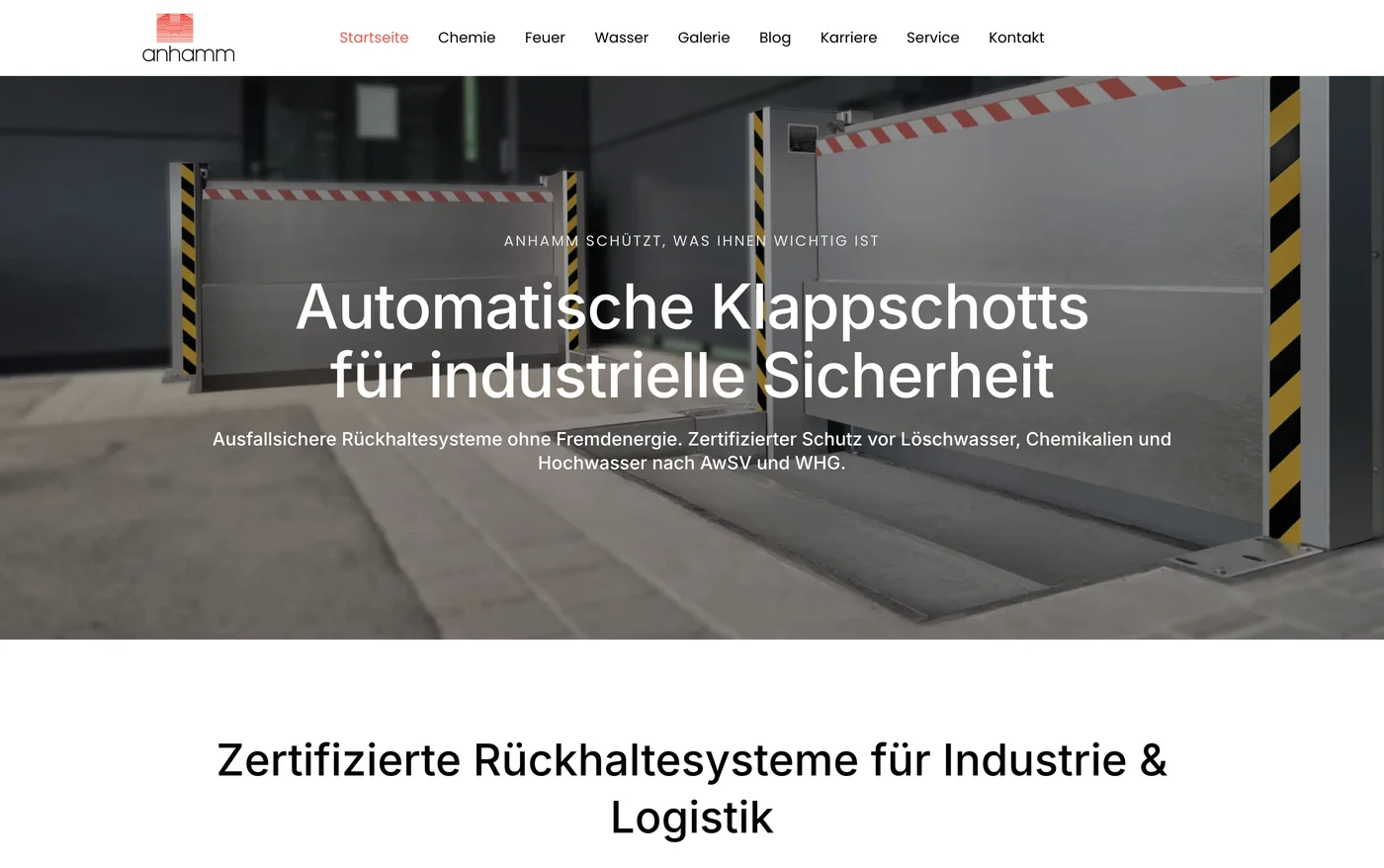
"Thanks to Kleosa's systematic approach, we were able to significantly optimize our sales process. The results exactly meet our high standards for quality and efficiency."
Josef Anhamm, Managing Director, Anhamm Liquid Barrier GmbH
The full story is in the Anhamm case study. None of it needed a clever ad headline. It needed tracking that knew a real buyer from a thesis.
FAQ: PPC for B2B lead generation
What is a good cost per lead for B2B Google Ads?
LocaliQ's 2026 benchmarks put business services at $93.69 per lead and industrial and commercial at $75.19. A good cost per lead is one your deal value can carry, so compare cost per qualified lead with your average order, not with the benchmark.
Is Google Ads or LinkedIn better for B2B?
Google Ads reaches buyers who are actively searching, so it usually brings leads faster. LinkedIn targets job titles and companies, which helps when few people search for your product, and it needs at least $10 a day per campaign.
How long does B2B PPC take to work?
Leads can arrive in the first weeks, but Google says bidding needs 1 to 2 conversion cycles to settle after a change. With B2B sales cycles of several weeks, judge an account over a quarter, not a fortnight.
Why am I getting unqualified leads from Google Ads?
Usually default settings and weak signals: search partners, broad match and "Presence or interest" location targeting, plus bidding that counts every form fill as a win. Tighten those settings and import qualified leads from your CRM.
What is B2B PPC?
B2B PPC is pay-per-click advertising aimed at business buyers, mostly on Google Search and LinkedIn. You pay for each click, and the goal is a qualified enquiry rather than an online sale.
The bottom line
PPC B2B lead generation isn't about more leads. It's about teaching Google which leads your sales team actually wants, then paying only for more of those.
Change the three defaults, build the negatives, and connect your CRM. The thesis student will find his sources somewhere else. He'll be fine.
Read this next: how ads fit into the full plan, budget split included, in our manufacturing marketing strategy guide.
Want B2B ads that bring leads your sales team wants?
We set up the tracking, landing pages and campaigns that turn ad spend into qualified B2B leads. See how our B2B Google Ads agency works, or tell us about your product directly.
Discuss Your Growth →Written by Edward R., Founder, Kleosa. Self-employed in e-commerce and digital marketing since 2018, including a year optimising Google Ads accounts for agencies on behalf of Google.